Understanding Church Membership
Below you will find an overview of the biblical purpose of church membership, the responsibilities and privileges that come with it, and why commitment to a local congregation is an important part of the Christian life. This is intended to give clarity for those considering membership and to help current members better understand the covenant relationship we share as a church family.
-
These passages show what the church is for. Membership matters because these purposes require a defined, committed people.
A People Who Display God’s Glory Together
The church is the visible instrument through which God displays His wisdom, love, and saving power. This is not something Christians do in isolation, but as a covenant community whose shared life proclaims the gospel to the world.
(Ephesians 3:10–11, 1 Peter 2:9–10, John 13:34–35)
A Body With Interdependent Members
The New Testament never presents the Christian life as independent. Believers are members of one body, each necessary for the health of the others. This mutual belonging requires more than casual attendance—it requires recognized, committed participation in the life of a specific church.
(1 Corinthians 12:12–27, Romans 12:4–5, Ephesians 4:15–16)
The Family and Household of God
The church is not an event or an organization; it is a family. Family language assumes responsibility, care, permanence, and shared identity. Membership is simply the church recognizing who belongs to that household and who is under its care.
(1 Timothy 3:15, Ephesians 2:19, Galatians 6:10)
A Community That Lives Out the “One Anothers”
The commands to love, encourage, bear burdens, forgive, and exhort one another require real relationships and ongoing commitment. These commands cannot be obeyed in a crowd of anonymous attenders; they require a defined group of people who know and are known by one another.
(Hebrews 10:24–25, Galatians 6:2, Romans 12:10–16, Colossians 3:12–16)
A Gathered People Who Share the Ordinances
Baptism marks entrance into the visible church, and the Lord’s Supper is the shared meal of that church. These ordinances are not private acts but church acts, expressing and affirming belonging to Christ and to His people.
(Acts 2:41–42, 1 Corinthians 10:16–17, 1 Corinthians 11:18–33)
-
These passages show how membership guards the holiness, unity, and witness of the church.
Guarding the Holiness of the Church Through Discipline
Church discipline protects the name of Christ, calls wandering believers to repentance, and prevents sin from spreading. This process requires a clear distinction between those who belong to the church and those who do not.
(Matthew 18:15–17, 1 Corinthians 5:1–13, 2 Corinthians 2:6–8)
Guarding the Church From False Profession
The church is called to affirm credible professions of faith. By carefully receiving members, the church protects the clarity of the gospel and the integrity of its witness.
(Acts 9:26–28, 1 John 2:19, 2 Corinthians 13:5)
Guarding Through Recognized Spiritual Leadership
Elders are charged with watching over specific souls and giving an account to God for them. Without meaningful membership, shepherding becomes undefined and Christians are left without intentional spiritual care.
(Hebrews 13:17, Acts 20:28, 1 Peter 5:2–3)
Guarding the Unity of the Church
Unity is not preserved by avoiding commitment, but by walking together in truth, love, and shared responsibility. Membership clarifies who is responsible for maintaining that unity.
(Ephesians 4:1–6, Romans 16:17, Titus 3:10–11)
-
These passages show how membership is one of God’s means of grace for the believer’s growth and perseverance.
Pastoral Oversight and Soul Care
Membership places a believer under the intentional care of shepherds who teach the Word, pray, counsel, and protect. This is one of the primary ways Christ cares for His people.
(Ephesians 4:11–14, Hebrews 13:17, 1 Thessalonians 5:12–13)
Mutual Encouragement and Perseverance
God uses the church to keep believers from drifting away. Through regular gathering, exhortation, and shared life, Christians help one another continue in the faith.
(Hebrews 3:12–14, Hebrews 10:24–25, Colossians 3:16)
A Context for Using and Receiving Spiritual Gifts
Spiritual gifts are given not for private growth but for the building up of the body. Membership provides the stable, relational context in which those gifts are exercised for the good of others.
(1 Corinthians 12:7, Romans 12:4–8, 1 Peter 4:10)
Participation in the Mission of Christ
The Great Commission is given to the church. Membership joins a believer to a people who together proclaim the gospel, make disciples, care for the needy, and plant churches.
(Matthew 28:18–20, Acts 13:1–3, Philippians 1:3–5)
The Visible Expression of the New Covenant Community
The new covenant promises a people who know the Lord, have forgiven sins, and have His law written on their hearts. The church seeks to reflect that reality by affirming believers and walking together in shared holiness and grace.
(Jeremiah 31:31–34, Hebrews 8:10–12)
-
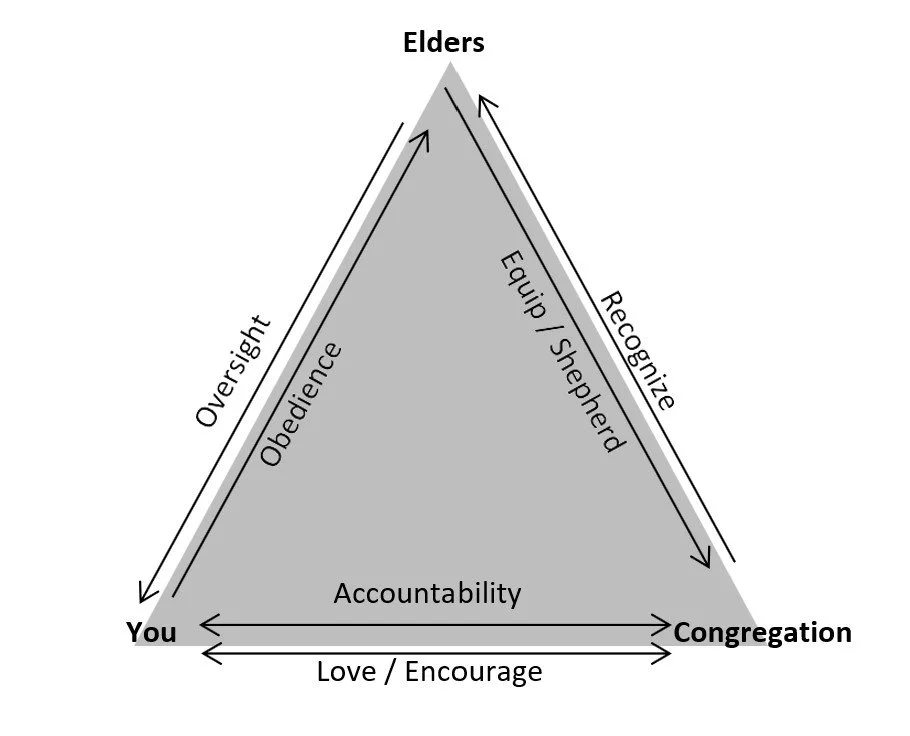
Putting the New Testament’s commands into practice in the life of a local church requires our relationships to have three defining characteristics.
Relationships that are committed
The purposes of the church cannot be fulfilled through occasional or informal connection. The Bible calls us to a shared life in which we bear one another’s burdens, stir one another up to love and good works, exercise our spiritual gifts for one another’s growth, and together display the glory of Christ to the world. These things take time, consistency, and faithfulness.
Commitment transforms a group of attenders into a body and a household. It allows pastors to shepherd real people, enables the church to care for those in need, and creates the stability in which deep discipleship can happen. Without commitment, the church cannot function as a family; it becomes a place we visit rather than a people to whom we belong.
This kind of covenantal commitment also reflects the nature of the new covenant itself. God does not relate to His people casually or temporarily. He binds Himself to us in steadfast love, and church membership is our imperfect but real reflection of that covenant love toward one another.
Relationships with a defined group of people
The Bible’s vision for the church assumes that there is a real, identifiable community of believers who know who they are responsible for and who is responsible for them.
The purposes of the church require this:
The body metaphor only works if the members are known.
The family imagery only makes sense if there is a recognizable household.
The ordinances only function rightly when practiced by a gathered church.
The protection of the church requires this:
Church discipline requires a clear distinction between those inside and outside the church.
Elders must know which souls they are accountable for.
The congregation must know whom they are affirming as fellow believers.
The provisions of the church require this:
Christians need to know who will walk with them, pray for them, and help them persevere.
Spiritual gifts can only be meaningfully exercised when there is a stable community to receive them.
In a culture shaped by individualism and constant mobility, this defined belonging is countercultural. But it is one of God’s primary means of grace for our growth and perseverance.
Relationships that give permission to speak hard words into your life
The Christian life is a life of ongoing repentance and transformation. Because of this, we do not merely need encouragement—we also need correction, warning, and loving confrontation.
The Bible commands us to:
Exhort one another every day so that we are not hardened by sin.
Restore one another in gentleness when we fall.
Speak the truth in love so that we grow into Christ.
These kinds of conversations require more than friendship; they require covenantal permission. Church membership is the way we say to one another: “I am responsible for your spiritual good, and you are responsible for mine. You have the right to pursue me when I wander, to warn me when I am in sin, and to remind me of the gospel when I am weak.”
This is not about control—it is about love and protection. It is one of the primary ways Christ keeps His people to the end. Hebrews tells us that we need one another daily so that none of us is hardened by the deceitfulness of sin. That kind of watchfulness is only possible when our relationships are deep, committed, and clearly defined.